Posts

Hydrocarbons Part - 2.

Image
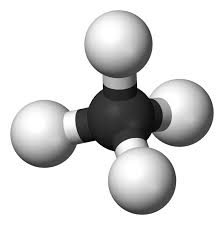
                                    Important   Topics Aliphatic Compounds In  organic chemistry ,  hydrocarbons  ( compounds  composed of  carbon  and  hydrogen ) are divided into two classes:  aromatic compounds  and  aliphatic compounds  also known as non-aromatic compounds. Aliphatics can be  cyclic , but only aromatic compounds contain an especially stable ring of atoms, such as  benzene . Aliphatic compounds can be saturated, joined by single bonds (alkanes), or unsaturated, with double bonds (alkenes) or triple bonds (alkynes). Besides hydrogen, other elements can be bound to the carbon chain, the most common being oxygen, nitrogen, sulfur, and chlorine. The least complex aliphatic compound is   methane   (CH 4 ).   Aliphatic compounds can be  saturate...
Hydro Carbons Part - 1

Image
                                              Hydrocarbons The first question which arises in our minds is “what is a hydrocarbon”.? So guys,   a hydrocarbon is an organic compound which contains both hydrogen as well as carbon not any other substance (compounds, elements, etc.). Hydrocarbons are examples of  group 14 hydrides . Hydrocarbons, from which one hydrogen  atom  has been removed, are  functional groups  called  hydrocarbyls .  Because carbon has 4 electrons in its outermost shell (and because each covalent bond requires a donation of 1 electron, per atom, to the bond) carbon has exactly four bonds to make, and is only stable if all 4 of these bonds are used. Aromatic hydrocarbons  (arenes),  alkanes ,  cycloalkanes  and  alkyne -based compounds are different types of hydrocarbons. Mo...

Metals and non-metals

Image
The  Chemical element s  can be broadly divided into  metals, metalloids and non-metals  to their shared  physical and chemical   properties . All metals have a shiny appearance (at least when freshly polished); are good conductors of heat and electricity; form  alloys  with other metals; and have at least one  basic oxide .  Metalloids  are metallic-looking brittle solids that are either  semiconductors  or exist in semiconducting forms, and have  amphoteric  or weakly  Acidic oxide . Typical nonmetals have a dull, coloured or colourless appearance; are  brittle   when solid; are poor conductors of heat and electricity; and have acidic oxides. Most or some elements in each category share a range of other properties; a few elements have properties that are either anomalous given their category, or otherwise extraordinary . In our daily life, we see different types of metals as well as non-...

Introduction to Chemistry.

Image
Hello my friends this is Prakhar, I m here to help you all in any problem related to chemistry. So friends let's first study about the Father of Chemistry Antoine Lavoisier. Antoine Lavoisier Antoine-Laurent de Lavoisier  (also  Antoine Lavoisier  after the French Revolution;  French:  [ ɑ̃twan lɔʁɑ̃ də lavwazje ] ; 26 August 1743 – 8 May 1794) was a French nobleman and chemist who was central to the 18th-century chemical revolution and who had a large influence on both the history of chemistry and the history of biology. He is widely considered in popular literature as the "father of modern chemistry". It is generally accepted that Lavoisier's great accomplishments in chemistry largely stem from his changing the science from a qualitative to a quantitative one. Lavoisier is most noted for his discovery of the role oxygen plays in combustion. He recognized and named o...